Threshing Dried Beans
A Low-Tech Method for Small-Scale Growers
read more…
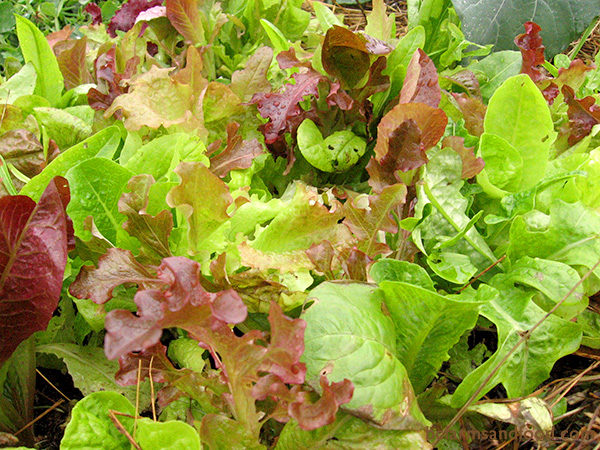
Want to eat fresh lettuce and salad greens this winter? Late summer to early fall is the time to plant your winter garden.

To me, this salad is like a taste of summer. There’s something more to it than its simple ingredients might suggest. Cucumber, fresh dill, and garlic, the bite of vinaigrette, and a touch of sugar meld together into a salad that is pleasingly pungent and slightly sweet.
I make this Cucumber Dill Salad recipe over and over again during cucumber season. I think you will too!

 It’s becoming possible to eat ripe local tomatoes year-round in South Coast, BC. Through the use of season extension in the garden, careful choice of tomato varieties, and planned buying and storage, you can access a supply of fresh tomatoes throughout most of the year.
Whether you plant your own or simply buy local, here’s how:
read more…
Unless you build a tall fence, the best way to minimize deer damage in a vegetable garden is to grow plants deer don’t like to eat. This year, try planting from our list of deer-resistant fruit, herb, and vegetable plants below.
 What do you know about the soil in your garden? Knowing your soil type can help you determine what to plant and how to amend your garden to its best advantage. Three simple do-it-yourself tests can help you find out the texture, composition and pH (acidity or alkalinity) of your soil. By doing a 2-minute hand test, by assessing the texture of your soil in a jar, and by looking at the weeds that grow naturally in your garden, you can learn a lot.
All soil comes from components of rock: sand, silt and clay. The kind of dirt you have in your garden depends on the proportion of each of these components.
read more…

Making your own pantry staple foods is a way to eat better and lower your food bills at the same time. We’ve put together nine of our favourite basic staple food recipes—from condiments and sauce, to bean pots, soup, bread, crackers, and pastry.
Ever wondered what is the best way to cook different kinds of potatoes? Russets, fingerlings, white potatoes, red potatoes, yellow potatoes, and blue potatoes. Here’s a guide to potato varieties and how to use them best.

Homemade biscotti are nothing like the dried-out versions you find in coffee shops. These twice-baked Italian cookies are crisp, nutty, and eminently delectable. Make these biscotti with local hazelnuts or use pecans for even richer flavour.
Wondering how to grow a healthy garden in the face of weather extremes? Protect your plants using microclimates. Here are 13 easy ways to protect plants from wind, rain, cold, heat, and drought.

Cold frames protect vegetables from cold, wind, rain and frost, and extend the growing season.
Adapting your growing area to protect young plants from wind, rain, cold, heat, and drought is key to a successful garden. You can do this by creating microclimates—specially designed areas in your garden that offer protection from the elements, so that your plants can thrive.
Microclimates are small areas that have different growing conditions from the surrounding region. These spaces can shelter plants and seedlings that are not strong enough to survive weather extremes. For example, a microclimate such as a wind buffer or a sun trap (a space that captures heat and sunlight) can shelter plants from cold. In drought conditions, a cool microclimate, such as the area under a tree canopy or an umbrella, can shade the plants beneath it and retain water to minimize heat stress.
As climate change brings more weather extremes, it is more important than ever to build microclimates into your garden. The predictable weather patterns we knew and counted on are becoming unpredictable. One week the weather may be hot and sunny—perfect for tomato transplants. The next week a cold wind pushes over young plants and chills their roots. When you create microclimate shelter areas in your garden, you help plants not only survive, but flourish during unpredictable weather.

A set of screens can simplify the task of cleaning barley seed.
Gardeners who save seed, or grow and harvest grains, know that separating seeds from their pods or husks can be a time-consuming job. While large industrial growers use machines to thresh and winnow seed crops, home seed savers can look to a number of simpler tools to accomplish the task. Once cleaned, seeds stored in moisture-proof containers can last for several years.
Here are six devices for separating seeds from debris and chaff:
read more…